5 Native Plants That Thrive In The High Desert (And Actually Look Beautiful)
Low maintenance doesn't have to mean boring. These five plants are drought tolerant, pollinator friendly, and genuinely stunning - and they all do well in Treasure Valley yards.
There's a persistent myth that native landscaping means scraggly, sparse, or somehow less-than. That a yard full of native plants looks unfinished, or wild in the wrong way, or like you just gave up on maintaining it.
I'd like to formally put that myth to rest.
The native plants of the Idaho sagebrush steppe are some of the most beautiful, interesting, and ecologically valuable plants you can grow in a Treasure Valley yard. They've been thriving in our alkaline soils, surviving our hard frosts, and coming back stronger every year for thousands of years - no fertilizer, no irrigation system, no Saturday morning maintenance required.
Here are five of our favorites - the ones we recommend most often, the ones our clients consistently fall in love with, and the ones that will genuinely make your neighbors stop and ask what you planted.
The 5 natives
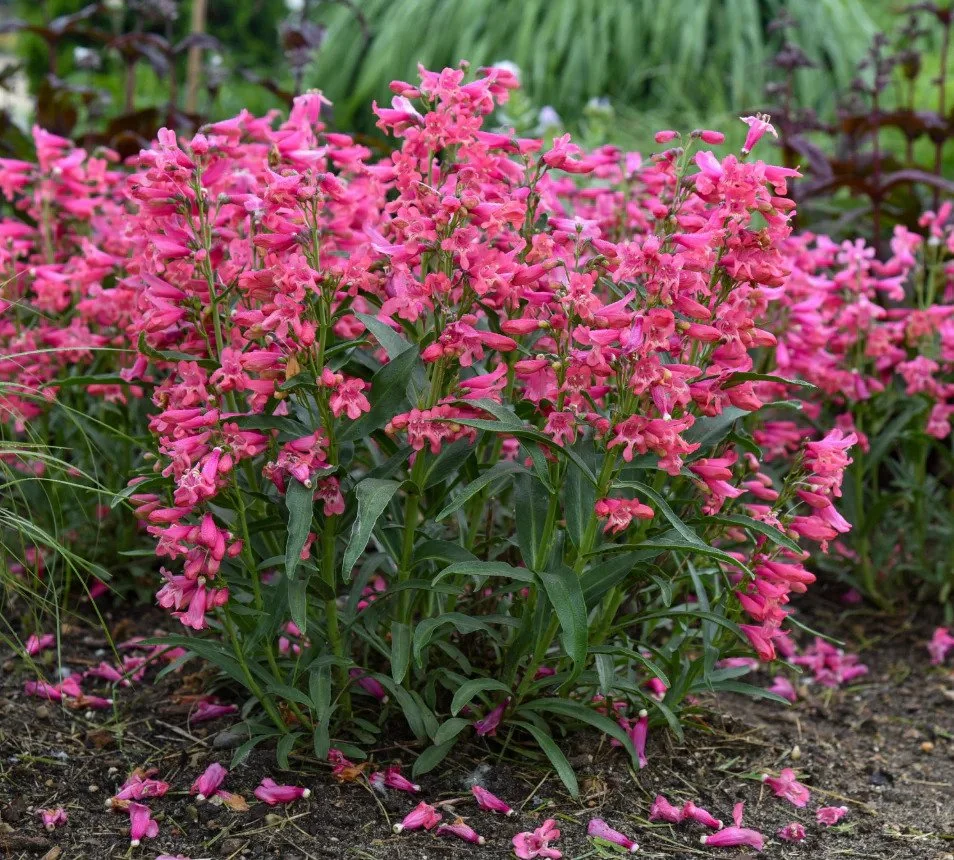
01. Penstemon
Penstemon spp.
Water: Low once established
Sun: Full sun
Attracts: Hummingbirds, bees
Bloom: Late spring - summer
If you want to watch hummingbirds hover in your yard all summer, plant penstemon. The tubular flowers - in shades of purple, pink, red, and white depending on species - are perfectly shaped for hummingbird feeding, and the bees aren't far behind. Multiple species are native to Idaho, which means you can create a layered planting with different heights, colors, and bloom times. Drought tolerant once established, thrives in our hot summers, and genuinely one of the most beautiful plants you can grow here. If you only add one native to your yard this year, make it penstemon.
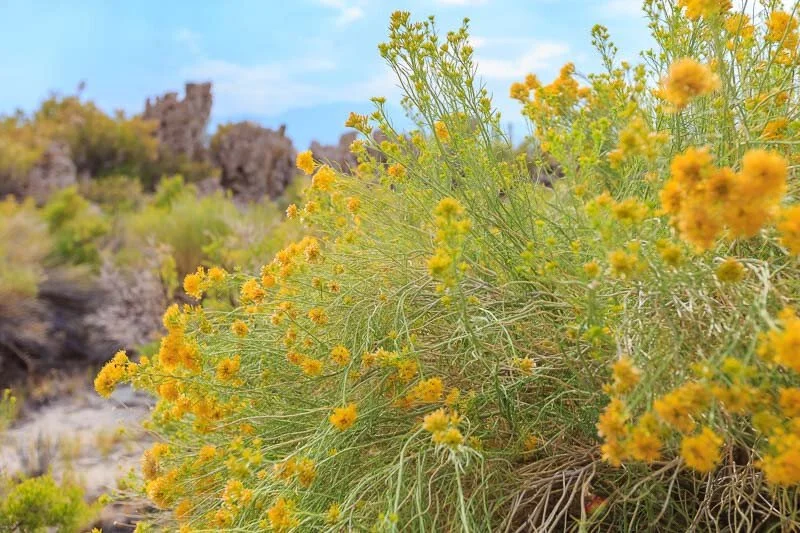
02. Rabbitbrush
Ericameria nauseosa
Water: Very low
Sun: Full sun
Attracts: Butterflies, bees
Bloom: Late summer - fall
Rabbitbrush is the secret weapon of Treasure Valley native landscaping. While most plants are winding down in August and September, rabbitbrush is just getting started - covered in bright yellow flowers that butterflies and bees swarm in late season when almost nothing else is blooming. Silver-green foliage looks beautiful all year. Virtually indestructible once established - it truly thrives on neglect. Plant it at the back of a border or as a structural anchor and watch it do its job year after year with almost no input from you.
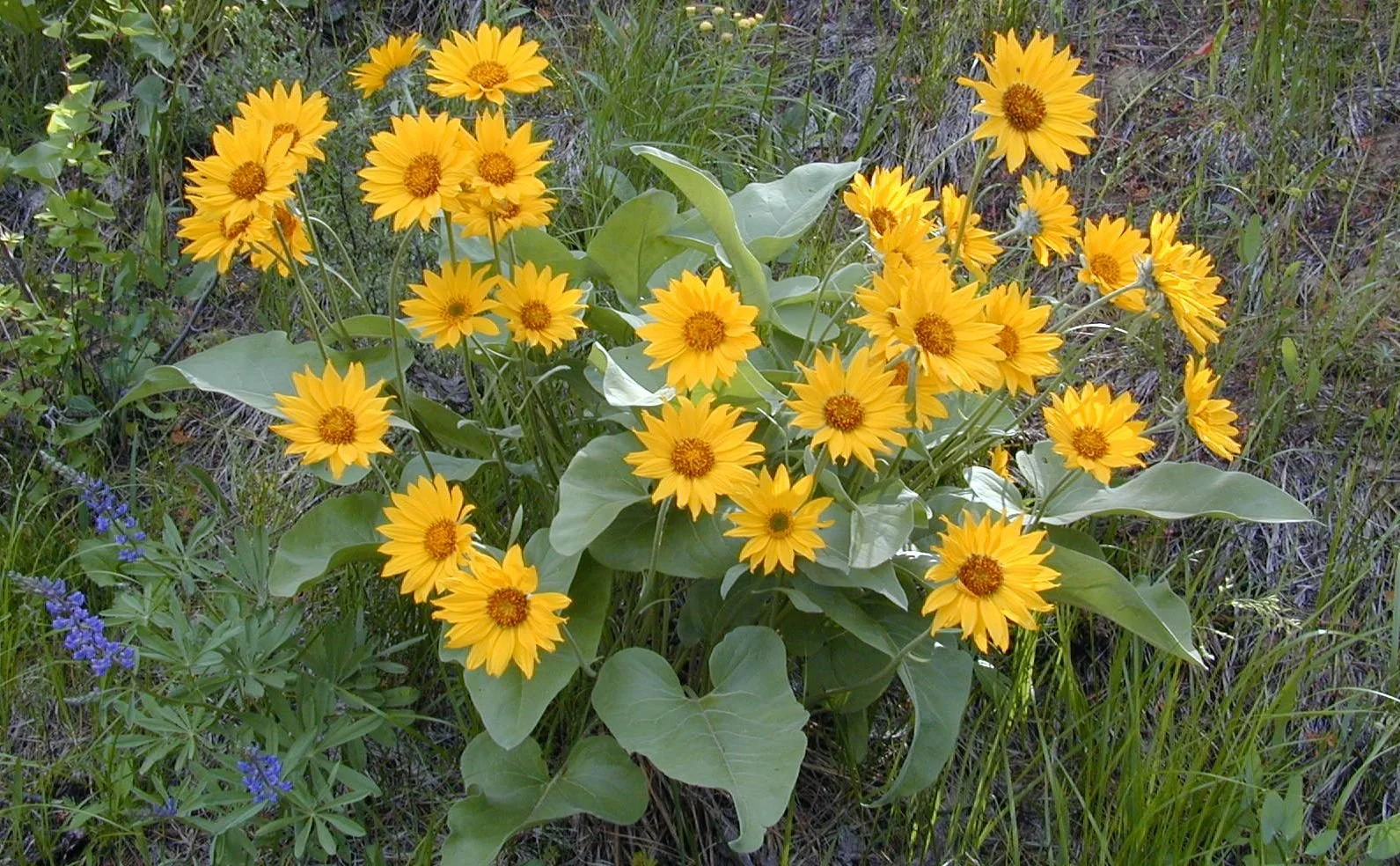
03. Arrowleaf Balsamroot
Balsamorhiza sagittata
Water: Very low
Sun: Full sun
Attracts: Native bees, butterflies
Bloom: Spring
If you've ever driven through the Boise foothills in April and seen those sweeping hillsides of yellow sunflowers - that's balsamroot. It's one of the most dramatic spring bloomers in our region and it's genuinely stunning in a designed landscape. Deep taproots stabilize soil and access moisture that other plants can't reach. All parts are edible and have been used as food and medicine by Indigenous peoples of this region for centuries. One honest caveat: balsamroot is slow. It won't bloom in year one and may take two to three years to establish. But once it does, it will outlive your mortgage. Be patient. It's worth it.
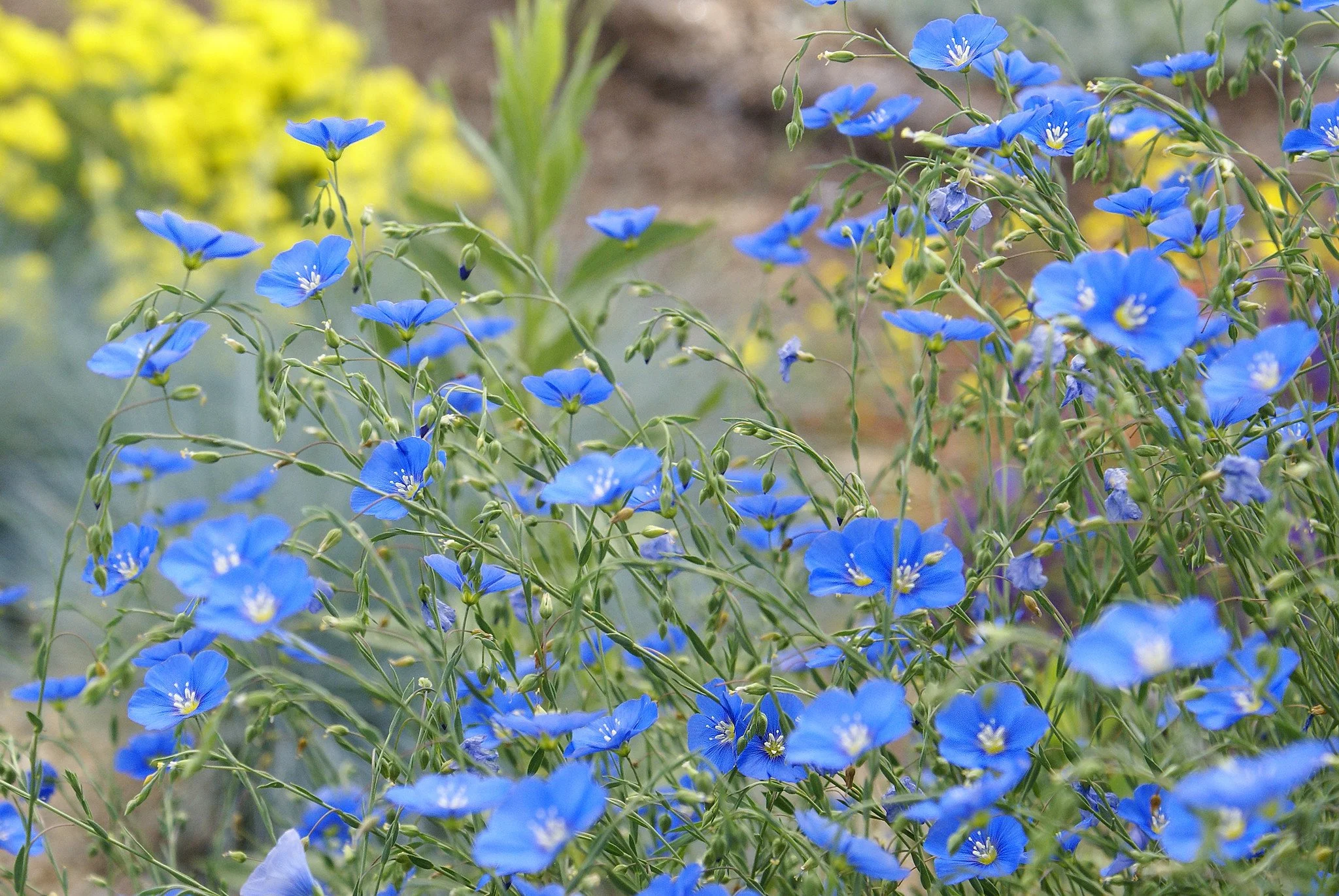
04. Blue Flax
Linum perenne
Water: Low
Sun: Full sun
Attracts: Native bees
Bloom: May - July
Blue flax is the plant we recommend to everyone who tells us they want something beautiful, low effort, and native - but aren't ready to commit to a full landscape redesign yet. Cheerful pale blue flowers from May through July. Reseeds easily so it fills in over time. Deer resistant. Drought tolerant. Almost impossible to kill once established. Direct sow in spring or fall and let it naturalize wherever it lands. Pairs beautifully with penstemon and rabbitbrush for a layered native planting that covers three seasons of bloom.
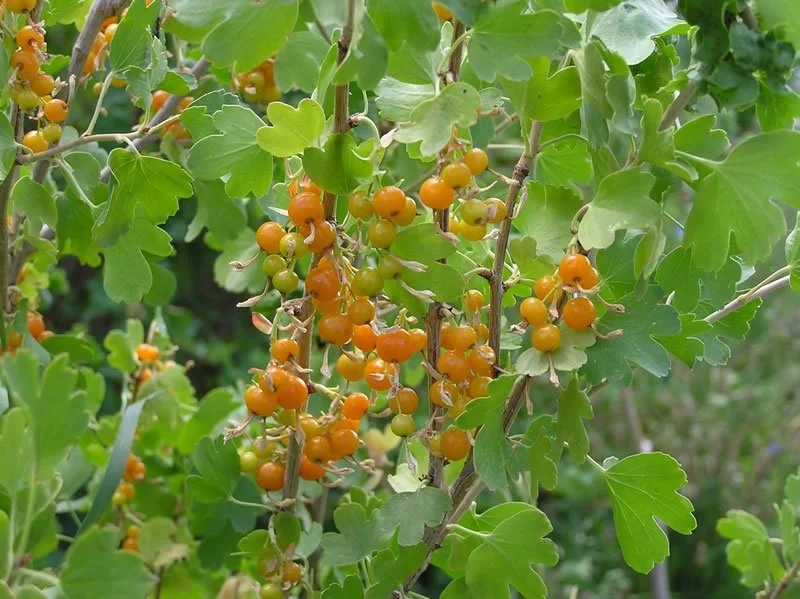
05. Golden Currant
Ribes aureum
Water: Low - moderate
Sun: Full sun - part shade
Attracts: Bees, birds
Bloom: Spring, edible berries summer
Golden currant is our favorite native for one simple reason: it does everything. Fragrant yellow flowers in spring attract early pollinators when not much else is blooming. Edible berries in summer feed both you and the birds. Brilliant orange and red fall color that rivals anything in a nursery catalog. And it does all of this on very little water, in our alkaline soil, without complaining. The University of Idaho Extension drought-tolerance tested this plant and it performed beautifully. If you want one native shrub that earns its place in every season, golden currant is it.
Where to find these locally: Draggin' Wing High Desert Nursery (waterthriftyplants.com) tests plants specifically for Treasure Valley conditions. The Idaho Native Plant Society Pahove Chapter holds an annual spring sale. Idaho Botanical Garden's plant sale is another excellent local source.
A note on designing with natives
These five plants are a starting point, not a complete plant list. A well-designed native landscape layers plants by height, bloom time, water need, and ecological function so something is always happening in your yard across the full growing season.
Penstemon and blue flax in the foreground. Rabbitbrush as a mid-border anchor. Balsamroot on a dry sunny slope. Golden currant in a part-shade corner. That's four seasons of interest with almost zero irrigation once established.
The magic is in how they work together - not just individually.
Want a native plant design built for your specific yard?
Knowing which plants work in the Treasure Valley is one thing. Knowing which ones belong in your yard - given your soil, your sun, your microclimate - is another. That's what a Soil & Story design figures out. Start with The Conversation - 90 minutes, $250, credited toward any full design.
Download the free Treasure Valley Permaculture Starter Guide for a complete plant list, soil tips, and our full climate breakdown.
[ Get the free guide → ]